
Diamonds have always been more than just jewellery. They are a symbol of love, celebration, achievement, and timeless beauty. But today, when someone starts looking for diamond jewellery, one question comes up very often: Should I choose a natural diamond or a lab-grown diamond?
Both natural and lab-grown diamonds can look beautiful. Both can be used in rings, earrings, pendants, bracelets, and bridal jewellery. Both can sparkle brilliantly when they are cut well. But they are not the same in origin, value, rarity, price, and long-term perception.
If you are planning to buy diamond jewellery for yourself, your wedding, an anniversary, or as a meaningful gift, understanding the difference between natural and lab-grown diamonds can help you make a confident and informed choice.
What Is a Natural Diamond?
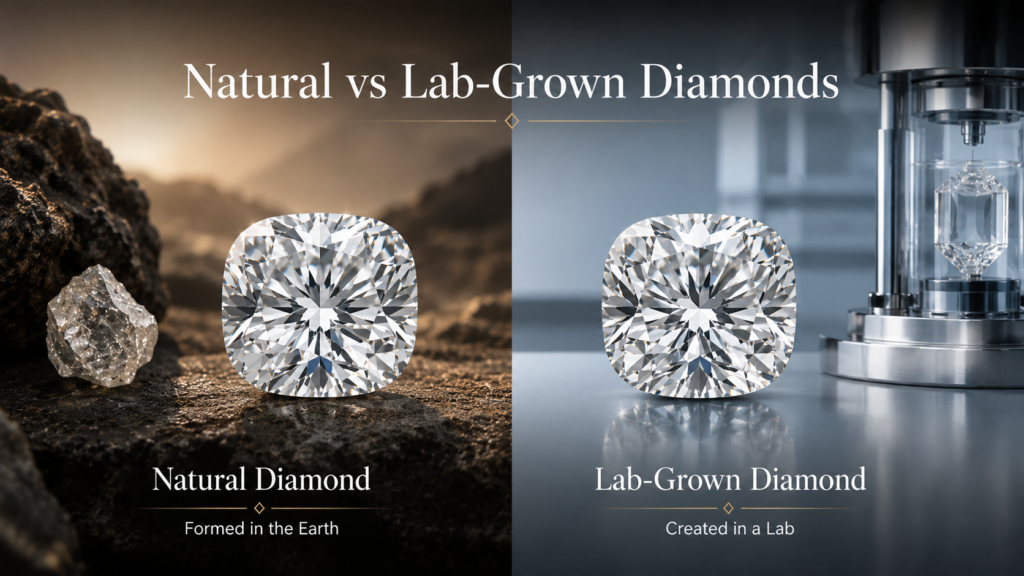
A natural diamond is formed deep inside the Earth over millions to billions of years. It is created under extreme heat and pressure, making every natural diamond a rare piece of nature’s history.
Natural diamonds are mined from the Earth, then cut, polished, graded, and set into jewellery. Because they are naturally formed, each diamond carries its own unique inclusions, characteristics, and story. No two natural diamonds are exactly alike.
This natural origin is one of the main reasons why natural diamonds are often associated with rarity, tradition, heirloom value, and emotional significance.
For many buyers, a natural diamond is not just a stone. It is something that can be passed down through generations, becoming a part of family memories and milestones.
What Is a Lab-Grown Diamond?
A lab-grown diamond is created in a controlled laboratory environment using advanced technology. The two common methods used to create lab-grown diamonds are HPHT, which stands for High Pressure High Temperature, and CVD, which stands for Chemical Vapor Deposition.
Lab-grown diamonds are made to have the same basic carbon crystal structure as natural diamonds. This means they can look very similar to natural diamonds to the naked eye. In fact, it is usually difficult for a regular buyer to tell the difference just by looking at the stone.
However, the key difference lies in the origin. A natural diamond is formed by the Earth over a very long period of time, while a lab-grown diamond is produced through a man-made process in a much shorter time.
That difference in origin affects price, rarity, value, and how the diamond is perceived in the jewellery market.
Are Lab-Grown Diamonds Real Diamonds?
This is one of the most common questions buyers ask.
Lab-grown diamonds are real diamonds in terms of their physical and chemical composition. They are not the same as diamond simulants like cubic zirconia or moissanite. A lab-grown diamond is made of carbon, just like a natural diamond.
However, it is important to understand that “real” does not mean “natural.” A lab-grown diamond is real, but it is not naturally formed. That is why transparent disclosure is very important while buying diamond jewellery.
A trustworthy jeweller should clearly mention whether a diamond is natural or lab-grown. The buyer should never be left confused.
Natural Diamonds vs Lab-Grown Diamonds: Key Differences
1. Origin
The biggest difference between natural and lab-grown diamonds is their origin.
A natural diamond is created inside the Earth over an extremely long period of time. It is mined, sorted, cut, polished, and then used in jewellery.
A lab-grown diamond is created inside a laboratory using technology that recreates diamond-growing conditions.
So, while both can look similar, their journey is completely different. One is a natural creation, and the other is a technological creation.
2. Appearance
To the naked eye, natural and lab-grown diamonds can look almost identical, especially when both are well cut and of good quality.
The sparkle of a diamond depends more on the cut, proportions, polish, and craftsmanship than on whether it is natural or lab-grown. A beautifully cut lab-grown diamond can sparkle brilliantly, and a poorly cut natural diamond may not look as lively.
This is why customers should not judge a diamond only by size or price. The beauty of a diamond lies in the balance of the 4Cs: cut, colour, clarity, and carat weight.
3. Price
Lab-grown diamonds are usually more affordable than natural diamonds of similar size and appearance. Since they are produced in laboratories and are not rare in the same way natural diamonds are, their pricing is generally lower.
This makes lab-grown diamonds attractive for buyers who want a bigger-looking diamond within a fixed budget.
Natural diamonds, on the other hand, are generally more expensive because of their natural rarity, mining process, and long-standing market demand.
If your priority is size and budget, lab-grown diamonds may feel like a practical choice. If your priority is rarity, tradition, and long-term value perception, natural diamonds may be more suitable.
4. Rarity
Natural diamonds are rare because they are formed by nature over an extremely long period of time. Their rarity is one of the biggest reasons they hold emotional and market value.
Lab-grown diamonds are not rare in the same way because they can be created repeatedly in controlled environments. As technology improves, production becomes easier, and the supply of lab-grown diamonds increases.
This difference in rarity is one of the most important points to consider when choosing between the two.
5. Value and Resale
Natural diamonds are often preferred by buyers who are looking for long-term value, heirloom jewellery, or traditional fine jewellery.
Lab-grown diamonds are usually more budget-friendly at the time of purchase, but they may not hold the same resale or long-term value as natural diamonds. Their prices can also change as production technology advances and supply increases.
That said, jewellery should not be bought only with resale in mind. Many people buy diamonds for emotional reasons. The right choice depends on what matters more to you: budget, size, rarity, tradition, or personal meaning.
6. Certification
Whether you buy a natural diamond or a lab-grown diamond, certification is very important.
A diamond certificate or grading report helps you understand the diamond’s quality, including details such as carat weight, colour, clarity, cut, measurements, and origin. For lab-grown diamonds, the report should clearly mention that the diamond is laboratory-grown.
Always ask your jeweller for proper certification and clear disclosure. This protects you as a buyer and helps you know exactly what you are purchasing.
7. Ethical and Environmental Considerations
Many buyers today are conscious about where their jewellery comes from.
Natural diamonds can be responsibly sourced through regulated trade systems and reputable suppliers. Buyers should ask jewellers about sourcing, certification, and transparency.
Lab-grown diamonds are often marketed as a more ethical or sustainable option, but it is also important to remember that lab-grown diamond production requires energy and technology. The environmental impact can depend on how and where the diamond is produced.
So, instead of assuming one is always better than the other, buyers should focus on transparency, responsible sourcing, and trusted certification.
Which Diamond Should You Choose?
The right diamond depends on your personal preference, budget, purpose, and emotional connection.
Choose a natural diamond if you value rarity, tradition, long-term significance, and heirloom appeal. Natural diamonds are ideal for engagement rings, bridal jewellery, milestone gifts, and pieces you want to preserve for generations.
Choose a lab-grown diamond if you want a larger-looking diamond within a certain budget, prefer a modern alternative, or are buying jewellery primarily for style and everyday wear.
There is no one perfect answer for everyone. The best diamond is the one that matches your values, your occasion, and your reason for buying it.
Natural Diamond or Lab-Grown Diamond for Engagement Rings?
For engagement rings, the choice becomes even more personal.
A natural diamond engagement ring carries the emotion of rarity and timelessness. Many couples choose natural diamonds because they want the ring to feel classic, precious, and long-lasting.
A lab-grown diamond engagement ring may appeal to couples who want a larger stone or a modern option within a specific budget.
Before deciding, ask yourself:
- Do I want the diamond to have natural rarity?
- Is long-term value important to me?
- Is size more important than origin?
- Do I want a traditional heirloom piece?
- Am I comfortable choosing a lab-created alternative?
Once you answer these questions, the decision becomes easier.
Natural Diamond or Lab-Grown Diamond for Everyday Jewellery?
For everyday jewellery like diamond earrings, pendants, stackable rings, or bracelets, both natural and lab-grown diamonds can work beautifully.
If you are investing in classic pieces that you want to wear for years, natural diamonds are a timeless choice. They add quiet luxury and lasting elegance to your jewellery collection.
If you enjoy experimenting with trendy designs or want bigger stones at a more accessible price, lab-grown diamonds may be a suitable option.
For daily wear, also consider durability, setting quality, metal purity, and craftsmanship. A diamond’s beauty is not only about the stone but also about how well the jewellery is made.
Final Thoughts
Natural and lab-grown diamonds both have their place in today’s jewellery world. A natural diamond is valued for its rarity, origin, tradition, and timeless appeal. A lab-grown diamond is appreciated for its modern creation, affordability, and visual beauty.
The most important thing is transparency. As a buyer, you should know exactly what you are purchasing. Whether natural or lab-grown, your diamond should come with proper certification, clear details, and guidance from a trusted jeweller.
At the end of the day, a diamond is not just about sparkle. It is about the emotion, memory, and meaning attached to it.
So, choose the diamond that feels right for your story.
FAQs
1. Is a lab-grown diamond a real diamond?
Yes, a lab-grown diamond is a real diamond in terms of its composition, but it is created in a laboratory and not formed naturally inside the Earth.
2. Can you tell the difference between natural and lab-grown diamonds by looking?
Usually, no. Natural and lab-grown diamonds can look very similar to the naked eye. Proper testing and certification are needed to identify the origin.
3. Are natural diamonds more valuable than lab-grown diamonds?
Natural diamonds are generally considered more valuable because of their rarity, natural origin, and long-standing demand in the fine jewellery market.
4. Are lab-grown diamonds cheaper?
Yes, lab-grown diamonds are usually more affordable than natural diamonds of similar size and appearance.
5. Which is better: natural or lab-grown diamonds?
Neither is better for everyone. Natural diamonds are ideal for rarity, tradition, and heirloom value. Lab-grown diamonds are suitable for buyers who want a modern, budget-friendly option.
6. Should I ask for a certificate while buying a diamond?
Yes. Always ask for a proper diamond certificate or grading report, whether you are buying a natural or lab-grown diamond.
7. Which diamond is better for bridal jewellery?
For bridal jewellery, natural diamonds are often preferred because of their timelessness, rarity, and emotional value. However, lab-grown diamonds can also be chosen depending on budget and preference.